Read more: |

Matti Grönroos
Seven Rs of the Change
On the other hand, the world stops quickly without changes.
A balance between realities is sought by the ITIL Change Management practice. Various organizations implement it with varying priority and success. An exaggerated Change Management can freeze even the most agile organization and it encourages people to seek shortcuts to bypass the controls.
ITIL helps to structure the practice by introducing the "7Rs" checklist.
- Design
- Make Impact Analysis
- Request for Authorization
- Design for Implementation
- Request for Authorization
- Implement
However, the reality differs substantially from the theory.
The most difficult part of change management is the impact analysis, which is practically impossible to do waterproof. It requires very good visibility to the IT big picture, and usually to the business processes, too.
An often-presented story is: This doesn't affect anything. If it did not, why would it be done?
ITIL has launched the concept of CAB, Change Advisory Board. It is the body to approve or to reject the requests for authorization. The name CAB is somewhat high-flying, because the CAB usually does not always give advice, nor it is a board-level body. The CAB often must trust the requestor, especially if the CAB members sit at the higher steps of the organization ladder. That is why it is essential to carefully plan who will be nominated to CAB members. Anyway, the most value the CAB delivers, is not the decision-making itself, but its existence forces specialists to create valid plans.
To systematize the change requests, ITIL offers a tool, Seven Rs. In every change project, you have to present an answer to at least to seven questions, each having R as the initial letter of the keyword.
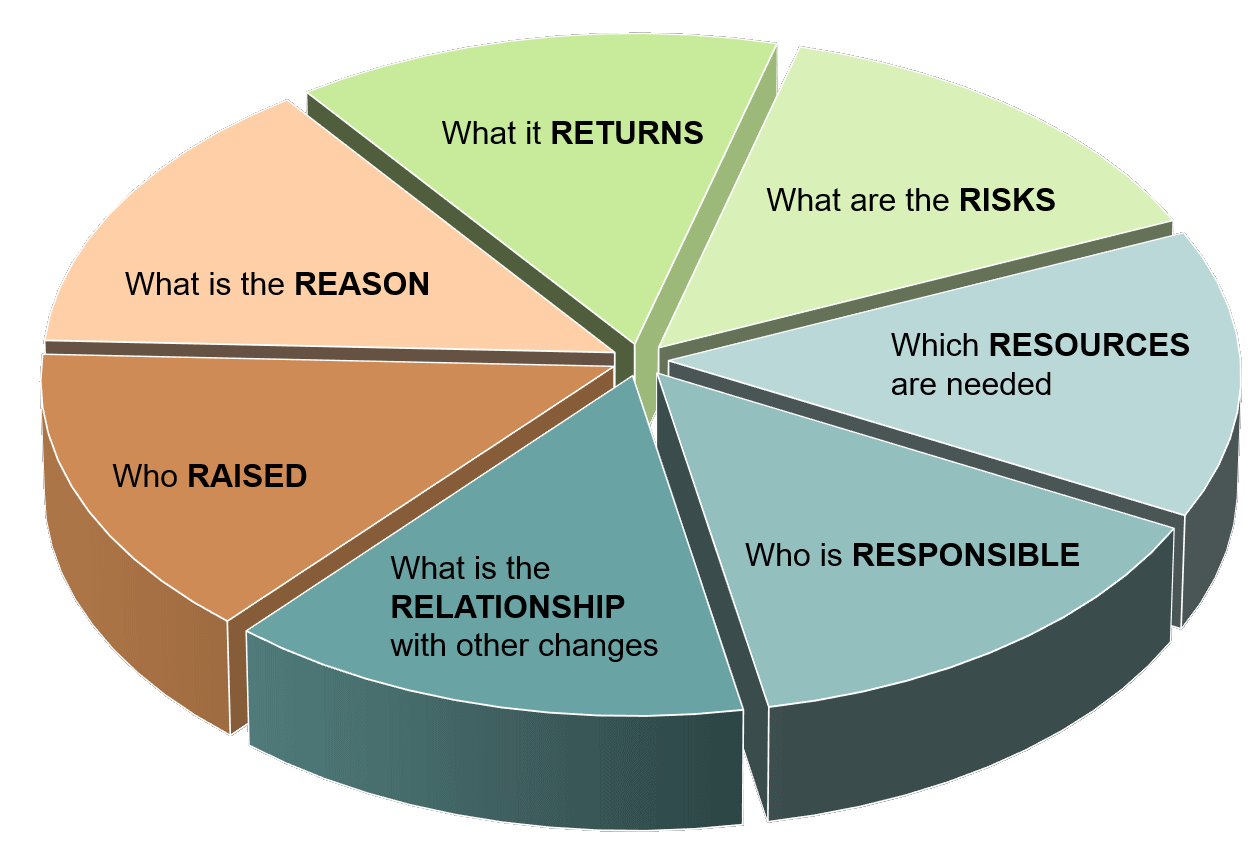
The Change Management shall avoid the one-size-fits-all thinking. Better to not put too much effort on small things, and the key focus should be on high-risk changes.
The extremes usually take a different path:
- Standard Changes being documented and pre-approved. These are subject to Change Management at the creation step only. They are delivered as service requests.
- Emergency Changes needing an immediate action. However, the change shall be reported and approved afterwards. (If this step is ignored, sooner or later all changes will be implemented as emergency hot fixes to bypass the authorization gates.) A good practice is to discuss with at least one person of upper management before the implementation, if possible.